When HBS released its Moonfare case study in November 2024, it captured the progress we’ve made toward making private equity accessible to more people worldwide. The study looked at Moonfare’s key strategic challenges and the efforts needed to build a platform that can scale to serve a growing global community of individual investors.
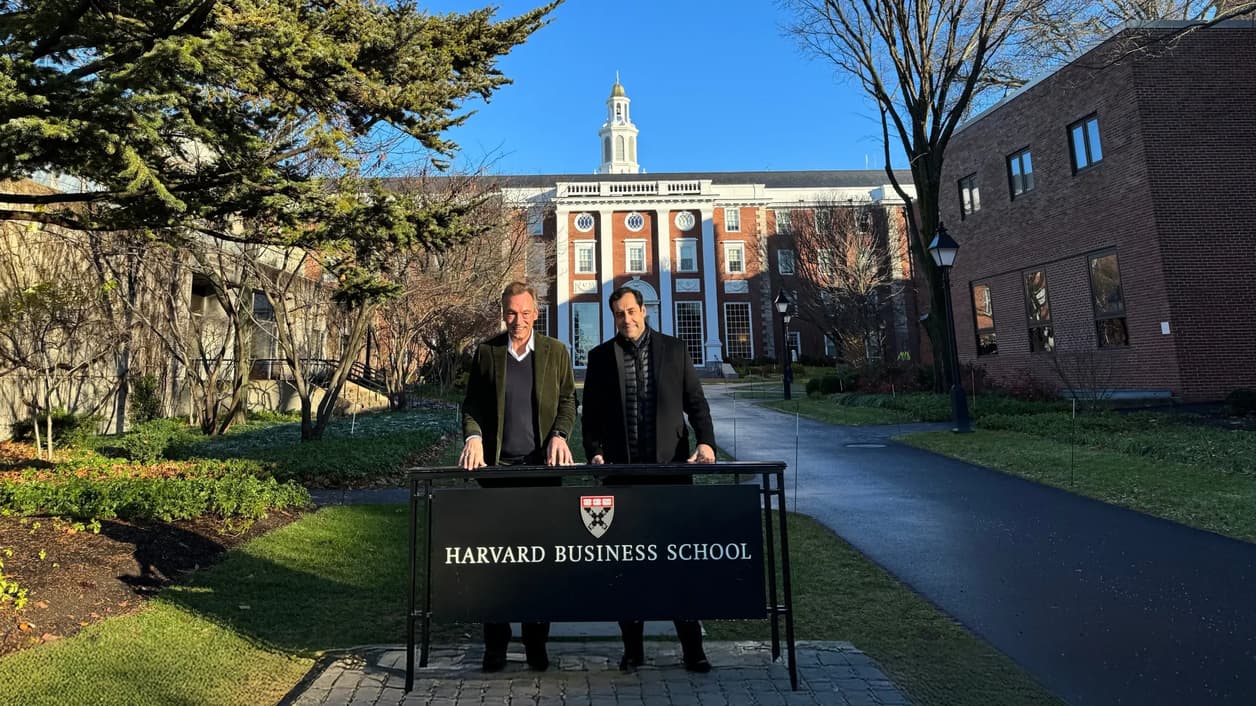
A year later, the text is still being studied and fueling more debate than ever. Our Co-CEOs, Steffen Pauls and Lorenz Jüngling, joined Professor Ted Berk and a new cohort of students in HBS’s Private Equity Finance course and shared a first-person perspective on the decisions, trade-offs and lessons learned from our journey so far.
“It was a great pleasure to be invited back to HBS for the second time. This lecture was one of the most honest mirrors held up to our business I’ve experienced. HBS students were exceptionally engaged and challenged us on suitability, the realities of capital calls and semi-liquid products, and the responsibility platforms like Moonfare have for clear investor education, which I fully welcome,” said Steffen.
Meanwhile, Lorenz commented: “We didn’t just debate the case study and our past decisions, but on what comes next and how private markets can become more accessible, more transparent and better aligned with the needs of a broader base of investors. It gave us much to reflect on as we continue to grow Moonfare.”
What has happened since
Moonfare’s own story has also evolved significantly since Harvard’s report first came out in November 2024. Since then, the firm has consolidated its position as the largest direct-to-consumer private equity platform globally, launched a direct investment programme for investors, expanded into new markets including Australia and the Czech Republic while deepening its presence in existing regions, and grown its assets under management by 20% to over €3.8 billion, alongside a significantly larger investor base.
This growth mirrors the broader shifts highlighted in the case study. Private markets are opening up, investors are demanding greater transparency, and technology is unlocking opportunities that simply didn’t exist a few years ago. The conversations in the HBS classroom point to a future in which private market investing is more global, more digital and far better aligned with the expectations of the next generation of investors.
Read Harvard Business School’s Working Knowledge write up of the case study here.