




Learn more about evergreen funds.

What makes the strategy so attractive in 2026?
Demand for liquidity is creating space for evergreen strategies.

The role of evergreens in your portfolio.
How open-ended funds complement closed-ended funds in today's portfolios.

Inside an evergreen fund.
Redemptions, gating and liquidity explained.
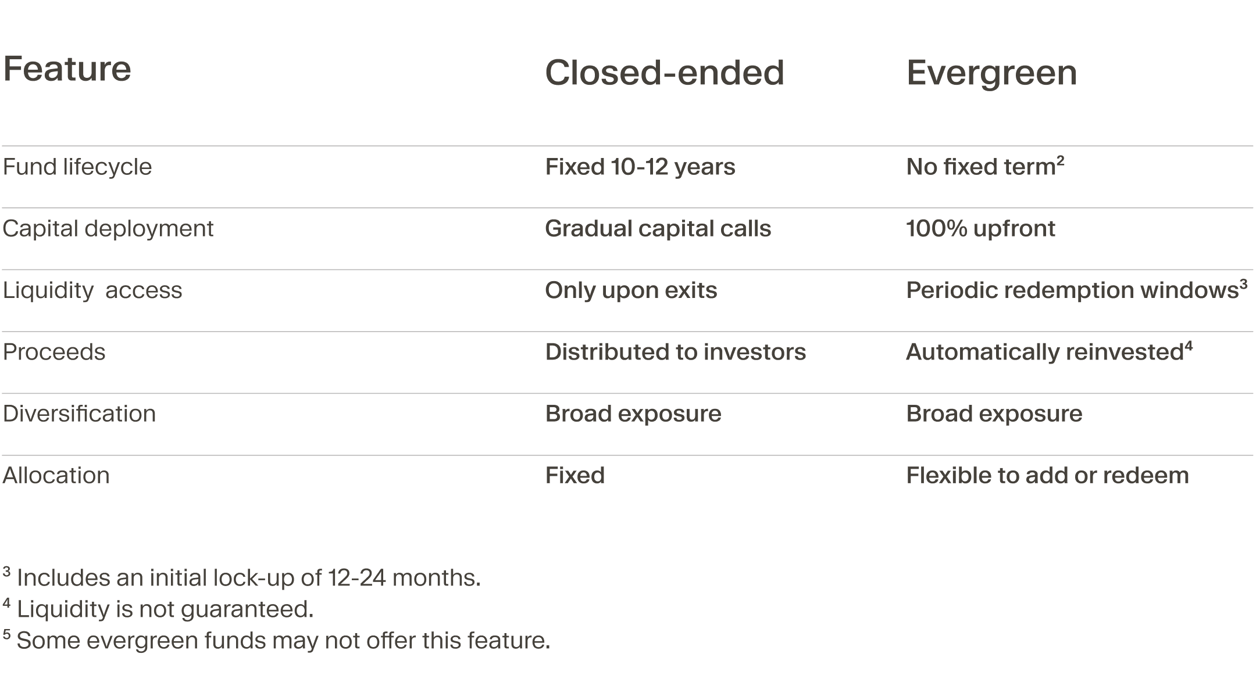
Compared to closed-ended funds, evergreen funds can be easier to manage. These structures allow individuals to invest once in an established portfolio, giving full visibility of underlying assets.⁶ Capital deploys immediately, not gradually over three to five years like traditional closed-ended funds. No need to keep cash reserves while waiting for unpredictable capital calls. When circumstances change, there may be access to periodic liquidity windows offering some liquidity over the term of the investment.

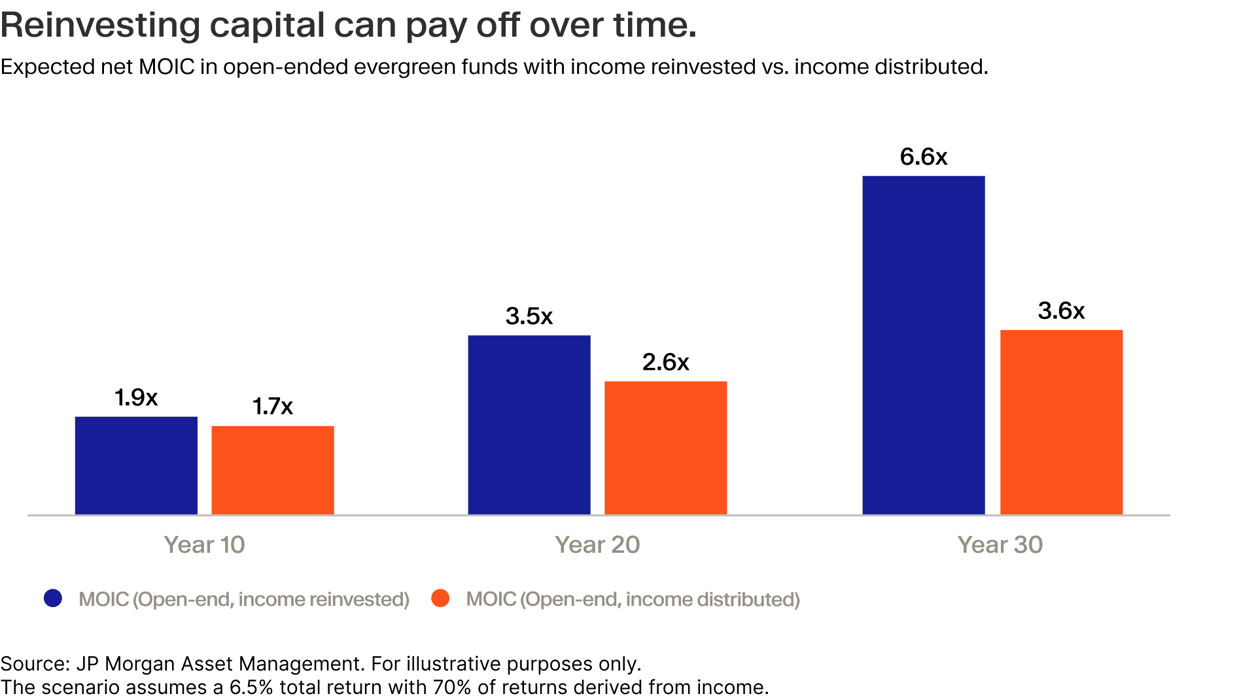
While closed-ended funds often deliver outperformance, adding evergreens might give investors some liquidity options. When funds exit investments and pay distributions, investors can be left holding idle cash, with their private markets allocation falling below target. With most evergreen funds, investors' distributions are reinvested in the fund.⁷ Capital stays deployed, compounds continuously and rebuilds allocation if all goes well.


- 1 Minimum investment may vary by country and local regulation.
- 2 Source: McKinsey "Private Markets Annual Review 2022"
- 3 Past performance is no guarantee of future returns.